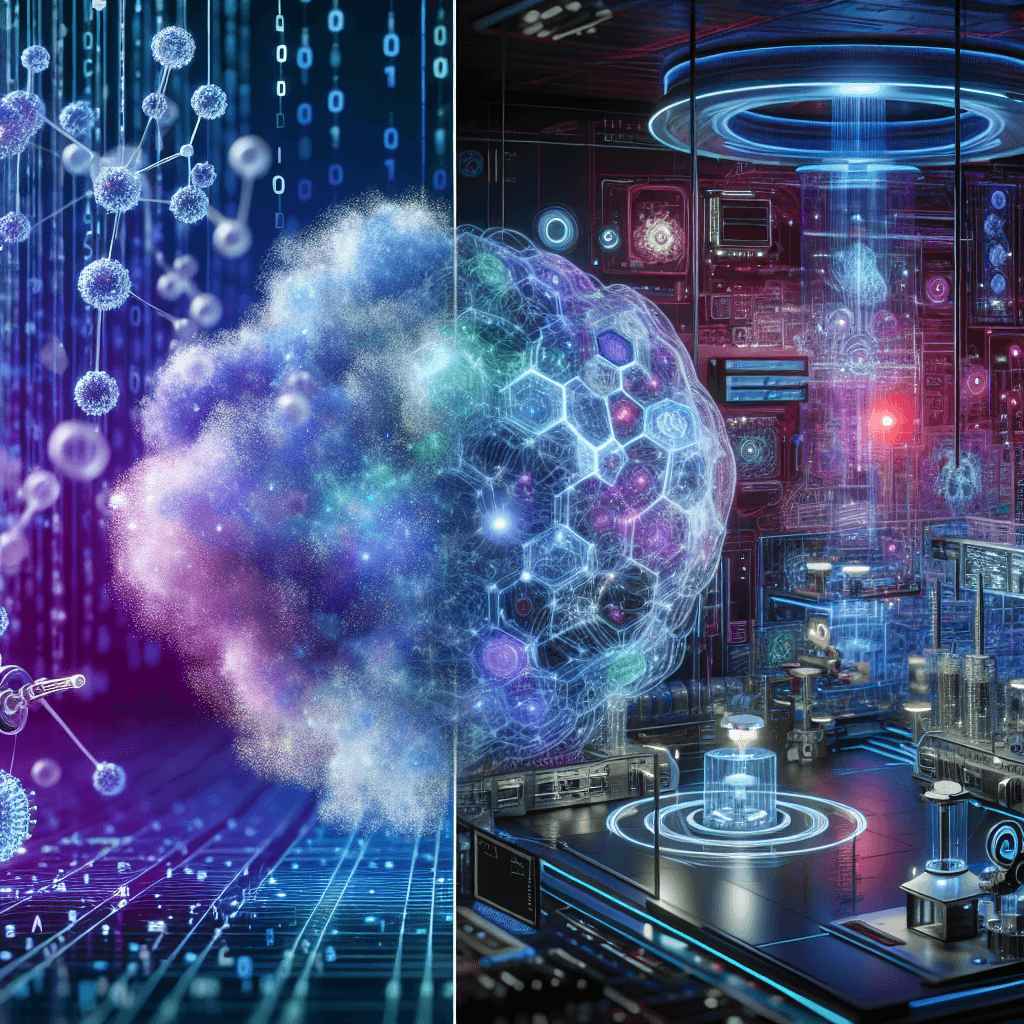
For the past few years, the tech world has been captivated by the "magic" of Large Language Models (LLMs). We’ve marveled at their ability to write poetry, debug code, and summarize meetings. However, for developers and researchers pushing the boundaries of what AI can actually do, the limitations have become clear. Traditional LLMs are essentially world-class mimics; they understand the probability of the next word, but they often lack a fundamental grasp of cause and effect, the laws of physics, or the ability to plan complex, multi-step scientific experiments.
That is changing. We are currently witnessing a paradigm shift where AI is moving from being a conversational interface to becoming a World Model—a system that doesn't just predict text, but simulates reality. As Yann LeCun and other industry leaders have argued, the next generation of Advanced Machine Intelligence must possess persistent memory, reasoning capabilities, and the ability to plan action sequences in the physical world.
The Rise of World Models: Simulating the Physical Reality
A "World Model" is an internal representation of how an environment works. Unlike a chatbot that predicts the next token in a sentence, a world model predicts the next state of a physical system. This is the difference between reading a description of a falling glass and understanding the gravity, velocity, and impact that leads to it shattering.
In 2025, this concept moved from theory to production. Google DeepMind’s release of Genie 3 marked a milestone, enabling the generation of real-time, interactive 3D environments from simple text prompts. Similarly, startups like World Labs have launched software like Marble, which builds 3D worlds from images and video, providing a "generative virtual playground" where AI agents can train without the risks or costs of the physical world.
"World models transform AI from a passive observer of data into an active simulator of reality, providing the 'digital twin' environment necessary for true autonomous discovery."
From Pixels to Physics
For developers, the implications are massive. We are moving away from training agents on static datasets and toward training them in high-fidelity simulations. When an AI can understand depth, occlusion, and friction, it can begin to assist in fields like robotics and autonomous manufacturing. These Vision-Language-Action (VLA) models perceive their surroundings, reason about the physics of the task, and execute precise physical movements alongside humans.
Reasoning Models: The 'System 2' of AI
While world models provide the where, reasoning models provide the how. Most early LLMs relied on "System 1" thinking—fast, instinctive, and prone to error. The new wave of reasoning models incorporates "System 2" thinking: a deliberate, slow process involving planning, evaluating alternatives, and self-verification.
Today's reasoning models no longer just "hallucinate" a path forward. They use internal search algorithms to test hypotheses before presenting a result. This is critical for scientific reasoning, where the cost of an incorrect step in a lab protocol can be thousands of dollars in wasted reagents or months of lost time.
- Planning: Breaking a complex goal (e.g., "synthesize this compound") into sub-tasks.
- Evaluation: Scoring the likelihood of success for each sub-task based on known chemical principles.
- Verification: Double-checking the final output against constraints before execution.
The Impact on Scientific Discovery: 79x Gains and Beyond
The convergence of world models and reasoning engines is nowhere more apparent than in the life sciences and materials science. We are seeing a transition from trial-and-error experimentation to predictive simulation.
Molecular Biology and Gene Editing
In recent lab experiments involving GPT-5, researchers utilized these advanced reasoning capabilities to optimize gene-editing protocols. The result was a staggering 79x efficiency gain in molecular cloning. By reasoning through the biological constraints and simulating potential outcomes, the model identified the optimal sequence of actions that human researchers had previously overlooked.
Accelerating Clinical Trials
In pharmacology, the traditional clinical trial process is notoriously slow and expensive. However, Quantitative Systems Pharmacology (QSP) models are now being integrated with AI world models to create "virtual patient" platforms. These platforms simulate disease trajectories and drug responses across diverse virtual populations before a single human dose is administered. This doesn't just speed up the process; it significantly reduces the risk of late-stage trial failures by identifying potential side effects in the simulation phase.
"The future of drug discovery is not found in a test tube, but in a high-fidelity simulation governed by the laws of biology and the logic of advanced reasoning models."
Actionable Takeaways for Technical Leaders
How should developers and decision-makers prepare for this shift from language-centric to world-centric AI? Consider these strategic pivots:
1. Prioritize Multi-Modal Data Pipelines
If you are building specialized AI tools, text data is no longer enough. To leverage world models, your data strategy must include 3D telemetry, video, and sensor data. The goal is to provide the model with enough spatial context to understand the environment it is meant to operate in.
2. Implement 'Reasoning-in-the-Loop'
Move beyond simple RAG (Retrieval-Augmented Generation). Start integrating agentic workflows where the model is required to generate a plan, critique its own plan, and iterate. Tools that allow for chain-of-thought verification are essential for high-stakes scientific or engineering applications.
3. Bridge the Simulation-to-Reality (Sim2Real) Gap
Invest in simulation environments like NVIDIA Isaac or DeepMind Genie. Training agents in a virtual world model allows for millions of iterations at zero marginal cost, which can then be fine-tuned for the physical world.
Conclusion: The Dawn of Planetary Intelligence
We are moving toward what some call "Planetary Intelligence"—a state where AI models are coupled with global networks of sensing and computing (including satellites and IoT) to reason about the world in real time. AI is no longer just a chatbot in a browser tab; it is becoming a collaborator in the lab, a designer in the manufacturing plant, and a simulator for the next generation of life-saving medicines.
The question for developers is no longer "How do I make my chatbot more human-like?" but rather "How do I give my AI the world model it needs to solve the problems we can't?" The era of scientific discovery powered by reasoning-driven AI has arrived. Are you ready to build within it?
Ready to explore how world models can impact your industry? Start by identifying the physical constraints of your domain and how a high-fidelity simulation could de-risk your most expensive processes.